

"White henna" is one of the most requested looks I get — and also one of the most misunderstood. Despite the name, it isn't henna at all. Here's the honest, complete picture of what white henna actually is, how it compares to traditional henna, and whether it's the right choice for your next event.
Quick Comparison
| Feature | Traditional Henna | White Henna |
|---|---|---|
| What it's made of | Natural henna paste (Lawsonia inermis leaves) | Cosmetic-grade body glue / adhesive gel with white pigment |
| How it works | Stains the top layer of skin (lawsone binds to keratin) | Dries on top of the skin like a raised design — does not stain |
| Color | Reddish-brown to dark chocolate | Bright white / ivory |
| How long it lasts | 1–3 weeks, fading gradually | 1–3 days, then flakes/peels off |
| Water & sweat sensitivity | Low once fully dry | High — avoid water and heavy sweating for the first few hours |
| Best for | Weddings, cultural & religious occasions, long-lasting body art | Engagement/bridal photos, festivals, editorial shoots, one-day events |
| Allergy risk | Very low with 100% natural henna | Slightly higher (it's an adhesive/paint) — patch test recommended |
How Is White Henna Applied?
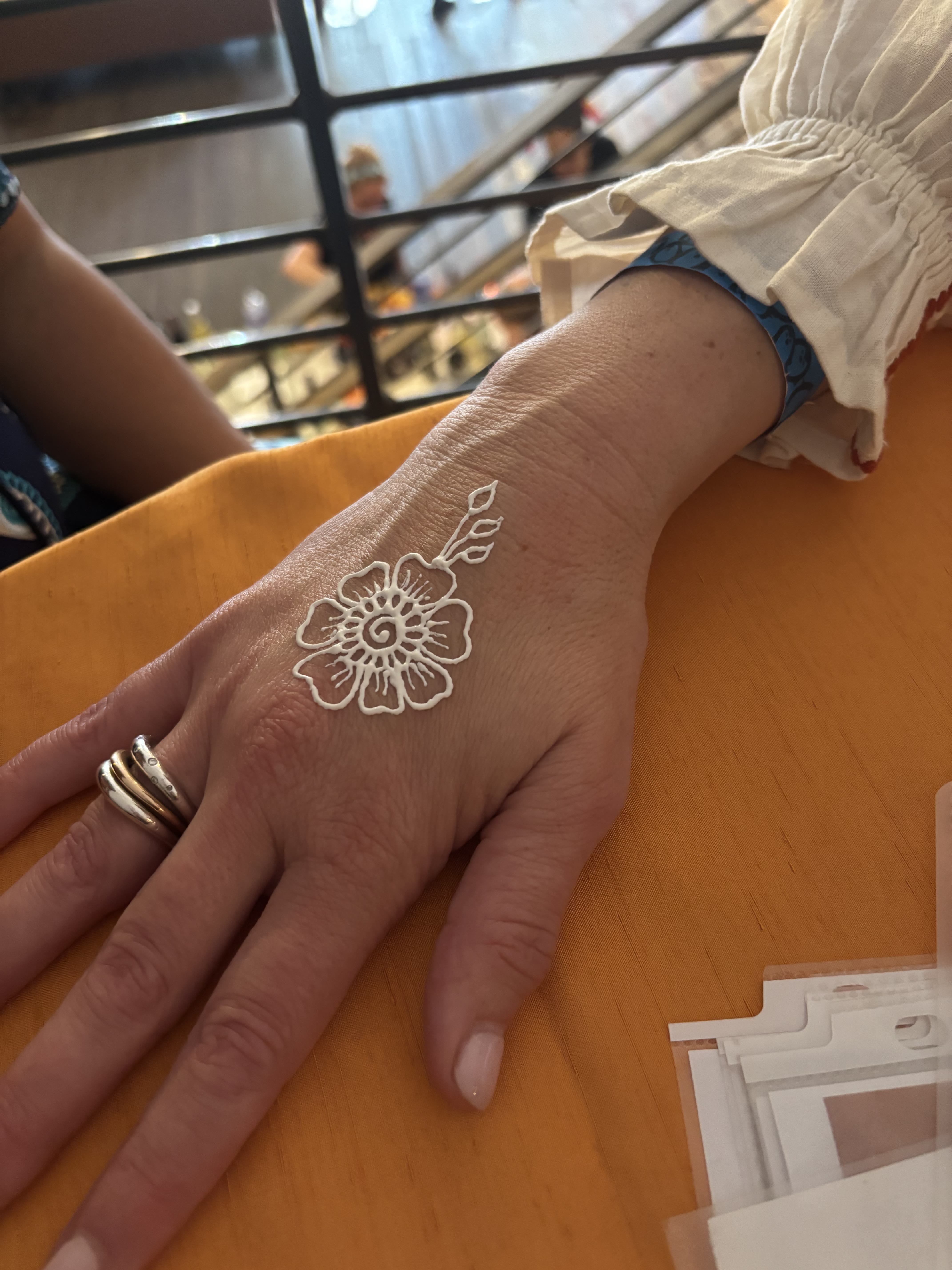
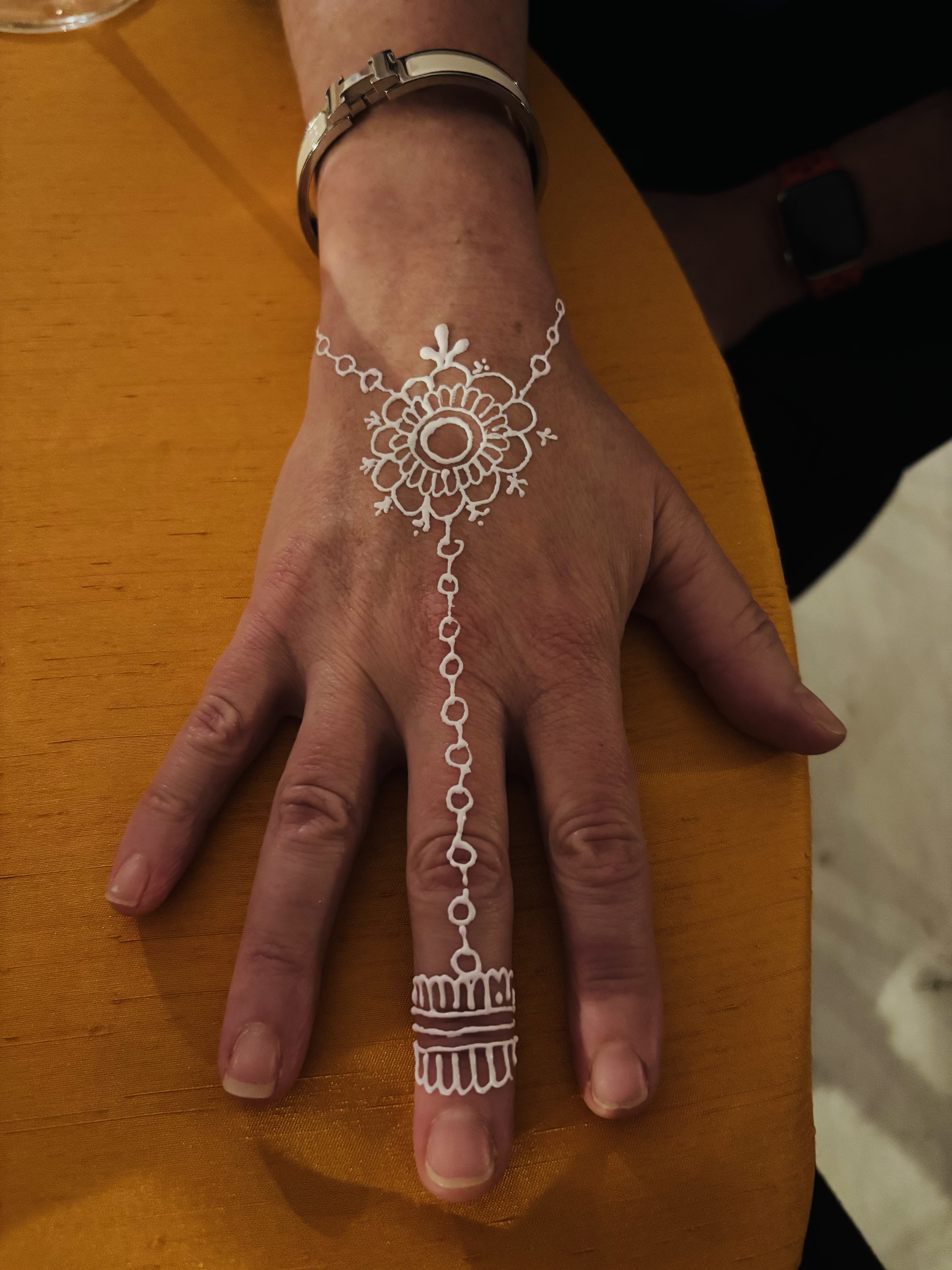
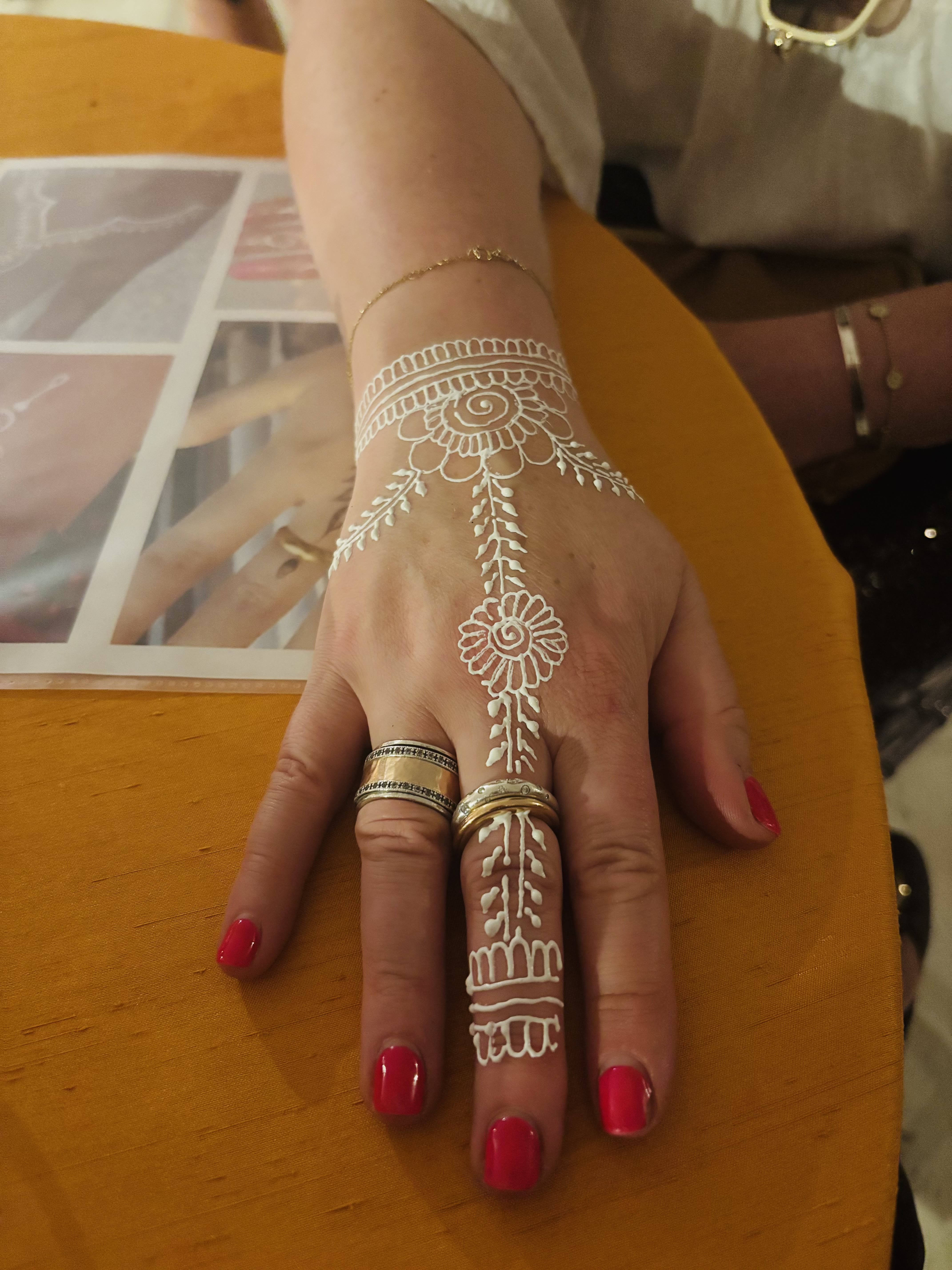
White henna is piped onto the skin with a cone or bottle in the same freehand style as traditional mehndi — florals, mandalas, wristbands, and finger detailing all translate beautifully. The design is left to air-dry for 10–20 minutes rather than hours, and there's no paste to scrape off afterward. Once dry, it looks like a delicate raised lace pattern sitting right on the skin.
Why People Love It
- Striking contrast — white designs pop beautifully against all skin tones, especially medium and deep tones, and photograph exceptionally well
- Fast turnaround — dries in minutes, so it's great for guests at events who don't want to wait hours for henna to set
- No long-term commitment — perfect if you only need the look for one day (engagement shoot, sangeet, festival, photoshoot) and don't want a stain lingering for weeks
- Pairs well with traditional henna — many brides get white henna accents on top of or alongside a traditional brown bridal mehndi design for extra drama in photos
Popular Occasions
- Bridal engagement & reception photos — a bold accent look for one special day
- Festivals & boho events — Coachella-style florals and wristbands
- Editorial & fashion shoots — photographers and stylists love the clean, high-contrast look
- Corporate & brand activations — a fun, fast, and memorable live-art station
Aftercare & What to Expect
- Let the design air-dry fully (10–20 minutes) before touching anything
- Avoid water, swimming, and heavy sweating for the first few hours to keep it intact
- It's normal for white henna to begin flaking or peeling within 1–3 days — this is expected, not a sign anything went wrong
- Gently exfoliate any remaining flakes off in the shower once you're ready to remove it
Safety Considerations
Because white henna is an adhesive/cosmetic paint rather than a plant dye, I always recommend a small patch test beforehand, especially if you have sensitive skin. It should never be used on broken, irritated, or sunburned skin, and it's not the same product as (and should never be confused with) dangerous "black henna," which contains the chemical PPD.
Which Should You Choose?
- Choose traditional henna if: you want a warm, natural stain that lasts for weeks, you're celebrating a wedding or cultural occasion, or you want the design on your palms/feet where henna stains darkest
- Choose white henna if: you want a bold, high-contrast look for photos or a single event, you don't want a longer-lasting stain, or you want a fun, fast add-on for guests at a party
- Can't decide? Many clients combine both — traditional bridal mehndi with white henna accents for the wedding photos
Related Articles
Interested in White Henna?
Ask about adding white henna to your bridal, party, or event booking.
Book Now