

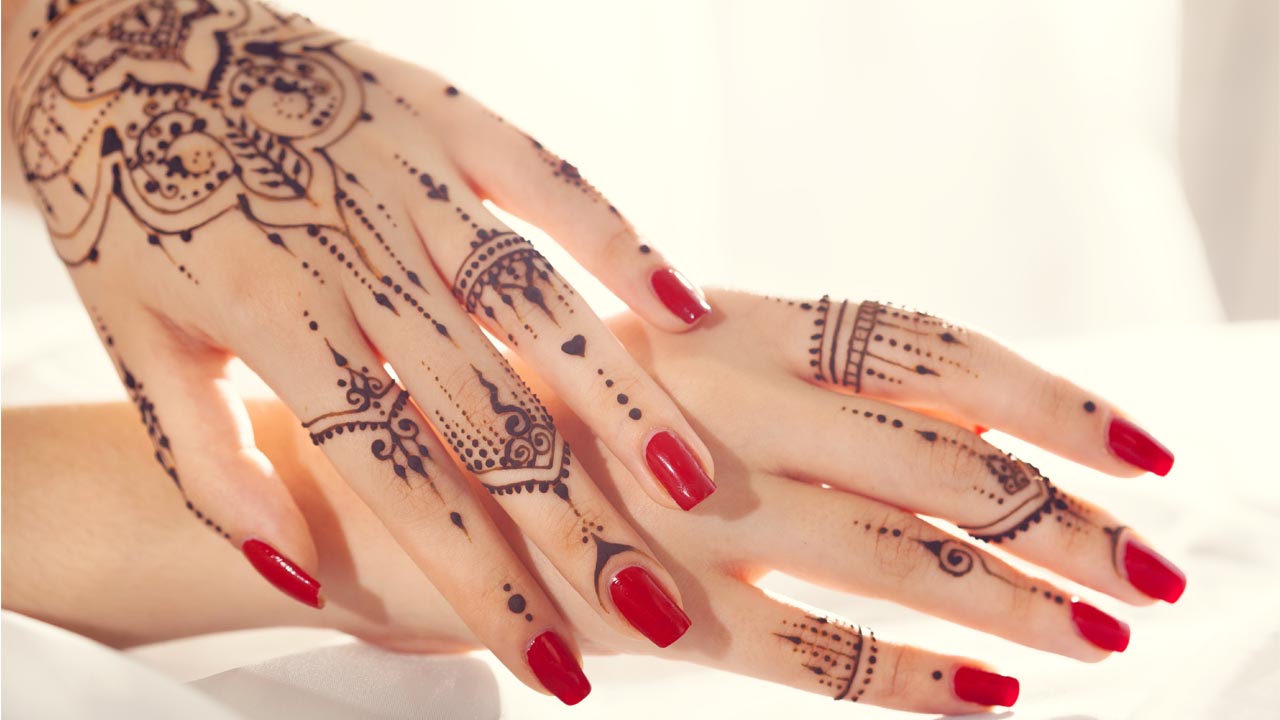
The difference between henna and a tattoo
The major difference between hennas and tattoos is how they are placed on our bodies, as well as how long they last. For one thing, tattoos are placed via a needle under the topmost layer of our skin and are therefore permanent. Henna, on the other hand, is a natural plant dye that sits on top of our skin.
Tattoos are permanent and they pierce the skin to carry the ink down to the blood bearing layers of the skin to create a design that is permanent. By contrast, henna is a temporary dye that just sits on the surface of the skin. It only stains the dead layers of skin cells and it lasts about few weeks. Henna comes out darkest on the hands and the feet where the skin is the thickest. And by contrast, the tattoos do not take as well on the hands and the feet because the skin tends to bleed and fade and ruin the tattoo design. In addition, henna is different from tattoo in the style of the art. Henna designs are usually traditional designs from India and the Middle East and North Africa, and they are very different from tattoo designs. But these designs can be made into tattoos.
Henna tattoo vs. real tattoo at a glance
- How it’s applied: henna paste is piped onto the skin with a cone. A tattoo is put under the skin with needles.
- Pain: henna is painless. Tattoos hurt and need time to heal.
- How long it lasts: a henna stain lasts about 1 to 3 weeks and fades on its own. A tattoo is permanent and can only be removed with laser treatment.
- Color: natural henna stains reddish brown. Tattoo ink comes in any color.
- Ingredients: natural henna is made from henna leaf powder, lemon juice, sugar, and essential oils. See what henna is made of and how it works.
Is a henna tattoo permanent?
No. There is no such thing as permanent henna. Natural henna only stains the top layer of skin and fades in 1 to 3 weeks as your skin renews itself. A product sold as “permanent henna,” or one that promises a black stain, is usually “black henna” containing PPD.
Is a henna tattoo safe? Avoid “black henna”
Natural henna is safe for most people. “Black henna” is not real henna: it often contains PPD (para-phenylenediamine), a chemical that can cause allergic reactions, blistering, and scarring. I use only 100% natural, chemical-free henna paste. Here are the ingredients in my henna.
Try henna before a permanent tattoo
Thinking about a tattoo but not ready to commit? Henna is a beautiful way to try a design for a few weeks first. Browse types of henna designs or book Avani Henna.